
1. Maize
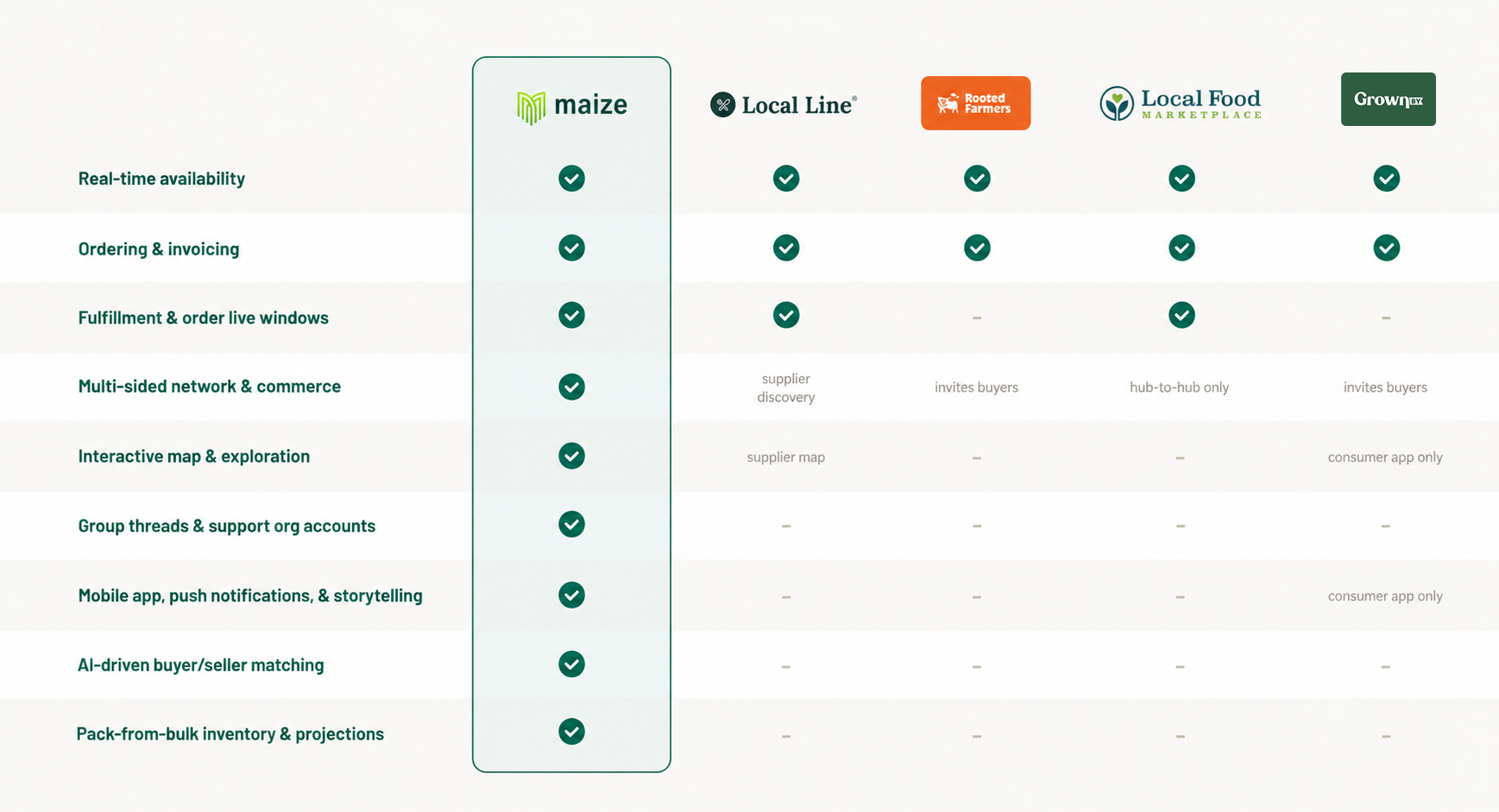
Maize is built around a simple idea: local food runs on relationships, and software should strengthen those relationships instead of standing between them. Farms and buyers connect through a real, multi-sided network rather than a one-way listing, with algorithmic matching that routes harvest to the buyers most likely to want it, before it ever hits a spreadsheet.
- Real-time availability, ordering, and invoicing in one place
- An interactive map for discovering nearby farms and buyers
- Group threads and support for organizational buyers like restaurants and institutions
- A mobile app built for daily use, with push notifications and storytelling built in
- Pack-from-bulk inventory and projections, so a harvest can be split across buyers without the manual math
It is the right fit for a farm or hub that wants to grow a real network of buyers over time, not just clear this week’s harvest.

2. GrownBy
GrownBy is a farmer-owned cooperative, which already earns it a lot of goodwill in our book. It started as CSA software and it still does that job better than almost anyone, with support for subscriptions, vacation weeks, mid-season billing, and a consumer-facing map so shoppers can find participating farms nearby. It has also added a wholesale product for farms that want to sell to invited business buyers.
If your farm’s business is mostly CSA membership, GrownBy is a serious, farmer-first option. It leans more toward managing a subscription base than coordinating an ongoing network of wholesale buyers, so farms with a lot of restaurant or institutional business tend to outgrow it faster.

3. Local Line
Local Line is one of the more established names in this space, and it shows in how complete the toolset feels. It handles ordering, invoicing, and fulfillment windows well, and its supplier map and discovery tools make it easier for buyers to find new farms to work with.
Where it tends to stop short is coordination. Local Line is strong at helping a buyer discover a supplier, but the ongoing back-and-forth of building and running that relationship still falls largely on the humans involved.

4. Local Food Marketplace
Visit Local Food Marketplace →
Local Food Marketplace is built for volume moving between food hubs, and it is genuinely good at that job, especially for larger hub-to-hub operations that need to move product across a wider network. It covers ordering, invoicing, and fulfillment windows solidly.
Its multi-sided commerce is mostly hub-to-hub, so an individual small farm or a single restaurant buyer will find fewer of the peer-to-peer features that smaller operations tend to want.
5. Rooted Farmers
Rooted Farmers keeps things simple for farms that already have a set list of wholesale buyers and just need a clean way to manage orders and invites. It covers real-time availability, ordering, and invoicing without a lot of extra complexity.
It works best as a lightweight tool for an established buyer list rather than a way to build a new network of buyers from scratch, since it does not include discovery, mapping, or matching features.
Picking the right one
None of these platforms are wrong, they just solve different problems. A CSA-heavy farm and a wholesale-focused hub do not need the same software, and a farm just getting started has different needs than one trying to coordinate dozens of buyers at once. Look at where your business actually spends its time (finding buyers, managing subscriptions, moving volume, or juggling relationships) and pick the tool built for that job.
Whichever platform ends up running your business, the goal underneath all of them is the same. Buy it from someone who picked it with their hands, and can shake yours when they sell it to you.